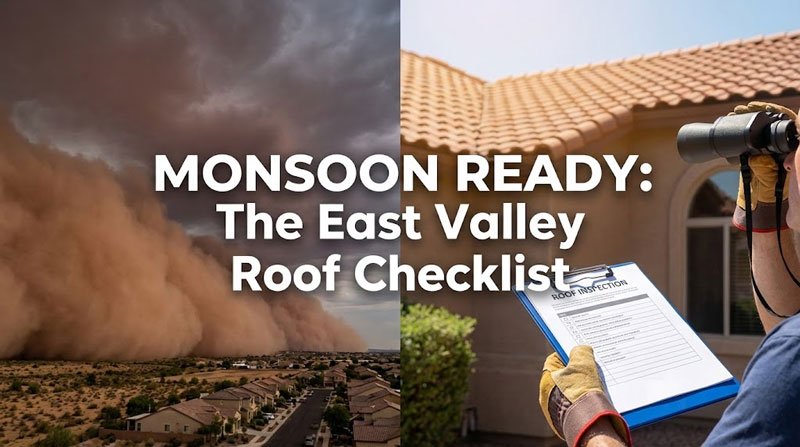
In Mesa and the surrounding East Valley, we know the drill. The air gets heavy, the dust walls roll in, and suddenly, months of bone-dry weather are interrupted by torrential downpours and fierce winds.
The Arizona monsoon season is the ultimate stress test for your home. A small, unnoticed crack in May can become a catastrophic interior ceiling leak by August.
At Copper Sky Roofing, we believe that proactive maintenance is always cheaper than reactive repairs. While we always recommend a professional inspection annually, there are several things you, as a homeowner, can do to monitor the health of your roof.
Here is our essential pre-monsoon checklist to ensure your home is secured against the elements.
A Critical Safety Warning Before You Begin
Do not climb on your roof.
Roof walking is inherently dangerous, especially on Mesa’s common clay or concrete tile roofs. Tiles are brittle and can break under foot traffic, causing more damage than you fix, and they are incredibly slippery when dusty or wet. This checklist is designed for “boots on the ground” or “ladder-at-the-eaves” observation only. Leave the roof-walking to licensed, insured professionals with the proper safety gear.
Part 1: The Ground-Level Inspection (Binocular Check)
Walk the perimeter of your home with a good pair of binoculars. You’d be surprised what you can spot from the driveway.
1. The Tile/Shingle Scan
- Tile Roofs: Look for “slipped” tiles that have slid out of place, revealing the underlayment beneath. Look for cracked or missing mortar caps on the hips and ridges (the peaks) of the roof.
- Shingle Roofs: Look for bald spots where granules have washed away, curled edges on shingles, or entire tabs missing after a windy day.
2. Flashing points
Look at the metal flashing around chimneys, vents, and where the roof meets a vertical wall. Does the metal look bent, rusted away, or pulled away from the house? Flashing is the most common entry point for water.
3. The Debris Traps
Are there large tree branches rubbing against the roof surface? These will strip the protective layers off shingles and crack tiles during a windstorm. Look for heavy accumulation of pine needles or leaves in the “valleys” (where two roof slopes meet).
Part 2: The Eaves and Gutters
4. Gutter Clearance
If you have gutters, are they clear? In Arizona, gutters often fill with dust and adobe mud during the dry season. When the rain hits, this turns into cement, causing water to back up under the roofing material.
5. Drip Edge Review
Look at the metal edge hanging just over your fascia board (the “drip edge”). Is it tight against the roof, or is it sagging? A sagging drip edge invites water to roll back under the roof and rot the wood decking.
Part 3: The Interior Inspection (The Attic)
Your attic tells the true story of your roof’s health. Go up on a bright, sunny day with a flashlight.
6. The “Pinprick” Test
Turn off your flashlight once you are situated. Do you see tiny pinpricks of daylight coming through the roof deck? If light can get in, water will get in.
7. The Water Stain Hunt
Shine your light on the underside of the wood decking and the rafters. Look for dark stains, white powdery residue (efflorescence), or swollen wood. These are signs of slow, active leaks that haven’t punched through your ceiling drywall yet.
8. Insulation Check
Is the insulation matted down or stained in certain spots? This indicates water has been dripping onto it.
Beyond the Checklist: Empowering Yourself
This checklist covers the immediate, visible basics of roof maintenance. However, roofing is a complex trade involving physics, material science, and intricate installation techniques. Every roof system—from flat polyurethane foam common on Mesa patios to high-barrel clay tile—has unique maintenance protocols and failure points.
To truly become an empowered homeowner, we recommend going deeper than a blog post. For detailed tutorials on specific systems, understanding insurance claims processes, or learning about material lifespans, we recommend browsing comprehensive industry resources. You can start by exploring these in-depth roofing guides to build your knowledge base on advanced topics.
Partner with Mesa’s Roofing Experts
Knowledge is power, but execution is everything. While this checklist helps you spot potential issues, fixing them correctly requires professional skill.
Don’t wait until the first monsoon rain is pouring into your living room to find a roofer. Be proactive. At Copper Sky Roofing, located right here on E Juanita Ave in Mesa, we specialize in preparing East Valley homes for the toughest weather Arizona can throw at them.
If your inspection uncovered slipped tiles, rusted flashing, or suspicious attic stains, contact us today at +1 480-410-4169 for a professional evaluation. Let us handle the hard work so you can sleep soundly through the next storm.