The dust has settled, the rain has stopped, and the morning sun is hitting your Mesa home. You walk outside after a fierce monsoon storm to check for damage. You scan the roof. No missing tiles? No shingles on the lawn? You breathe a sigh of relief.
But you might be celebrating too soon.
While it’s obvious when a 70-mph microburst rips half a roof off, the most insidious storm damage is often invisible from the driveway. In Arizona, wind doesn’t just tear roofs apart; it subtly compromises them, setting the stage for major leaks during the next storm.
At Copper Sky Roofing, our emergency lines light up after every major weather event. Here is what our inspectors look for—and what you need to know before you assume your roof survived unscathed.
The “Hidden” Killer: Creased Shingles
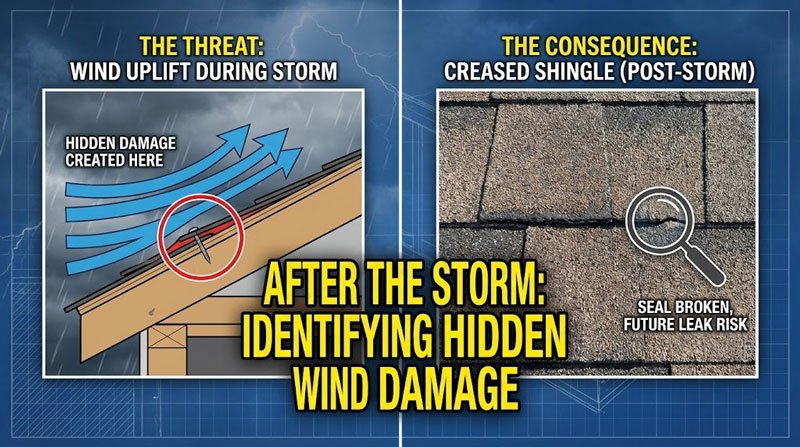
On an asphalt shingle roof, wind damage isn’t always about shingles blowing off. It’s about shingles blowing up.
High winds create a vacuum effect (uplift) that pulls the shingle tabs upward. If the wind is strong enough, it bends the shingle back, creasing the top near the nail line. When the wind dies down, the shingle lays flat again. It looks perfect from the street.
Why it’s dangerous: That crease has broken the asphalt seal and fractured the fiberglass mat. The next time wind hits, that shingle will flap loose, allowing water driven by the wind to get underneath and rot the decking.
Tile Roofs: The Shift and Slide
Concrete and clay tiles are heavy, so people assume they are windproof. They aren’t.
While it takes a lot of force to lift a tile off the roof entirely, it takes much less force to “shift” them. A strong gust can slide a tile just an inch or two out of alignment. This breaks the interlocking water channel between tiles, creating a direct path for water to hit the delicate underlayment paper beneath.
If you see rows of tile that look slightly crooked or “zippered,” your waterproof barrier is likely compromised.
Engineering Against the Wind
Why do some roofs fail during a monsoon while others hold tight? It often comes down to the quality of the materials and the installation.
Standard “builder-grade” shingles have a narrow nailing strip and standard adhesive. In high-wind areas like the East Valley, we often recommend upgrading to shingles specifically engineered for uplift resistance.
Brands like Malarkey Roofing Products design their shingles with larger nailing zones and specialized, aggressive sealants specifically to resist the kind of high-wind uplift we see during Arizona monsoons. Investing in wind-rated materials is your best defense against future storms.
Your Post-Storm Action Plan
If a major storm just hit your neighborhood, here is what you should do immediately:
- DO NOT climb on the roof. Roofs are slippery when wet, and damaged structures can be unstable.
- Document from the ground. Take photos of any visible damage on the roof, in your yard (debris), and inside your attic (water stains).
- Check for “bruising.” If there was hail, look at your A/C unit fins, gutters, or window screens. If soft metal is dented, your soft asphalt shingles are likely dented (bruised) too, which knocks off protective granules and shortens roof life.
Don’t Wait for the Next Rain
A compromised roof is a ticking clock. If wind has lifted your shingles or shifted your tiles, the very next rainstorm could result in interior ceiling damage.
Get peace of mind now. Contact Copper Sky Roofing at +1 480-410-4169 for a post-storm inspection. We will provide an honest assessment of whether your roof is secure or if emergency repairs are needed to protect your Mesa home.